Torque
Torque the fastener to the aircraft maintenance data before you safety it. Safety wire and cotter pins keep a part from backing off. They do not hold or replace a torque value. This page is a shop reference, not approved data.
Where the number comes from
Use the torque in the aircraft manufacturer's maintenance data. AC 43.13-1B Table 7-1 is a standard-torque table for nuts and bolts when the aircraft data does not give one. It is organized by thread size and by the nut or bolt material. Do not substitute a generic chart for a value the manual already states, and do not add thread lube unless the data says the published value already assumes it.
- Read the wrench at eye level on a beam wrench. A click wrench is set before the pull, then pulled smoothly until it clicks once.
- A dial wrench shows the live value. Stop at the mark. Do not keep pulling past it.
- For a castellated nut, start at the low side of the range and continue tightening until a slot lines up. Do not back the nut off to catch the hole (AC 43.13-1B paragraph 7-126).
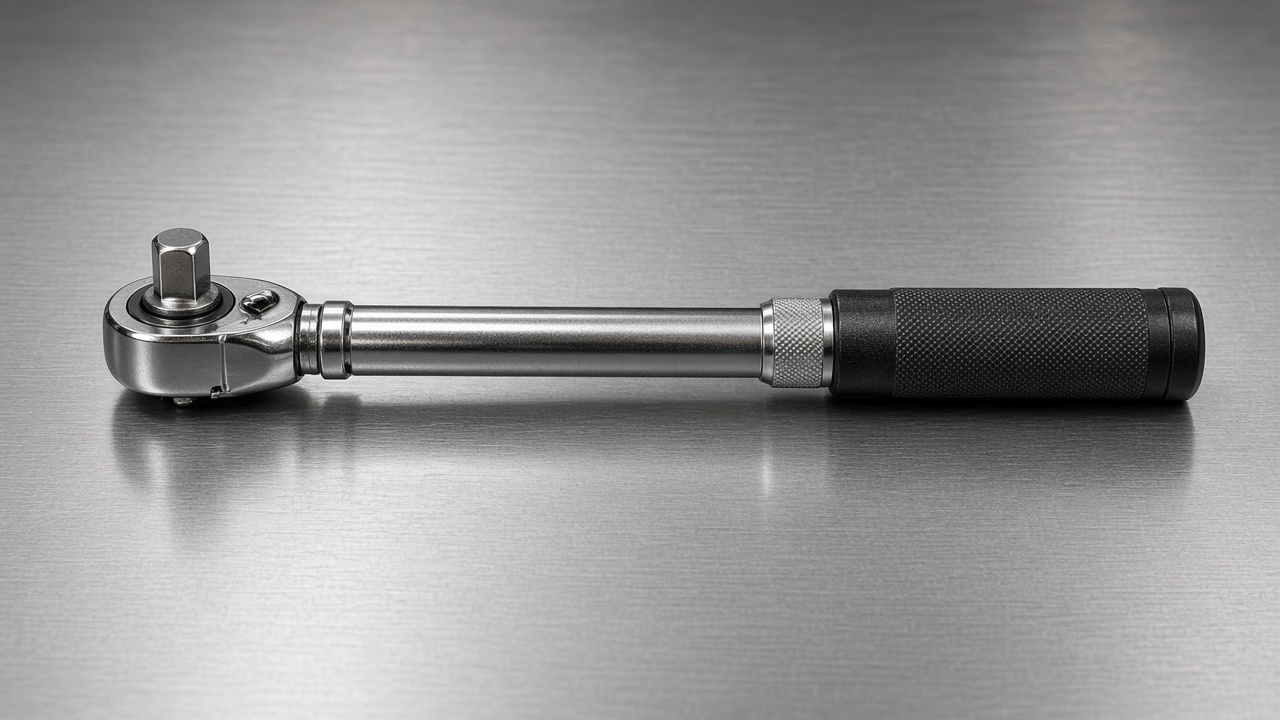
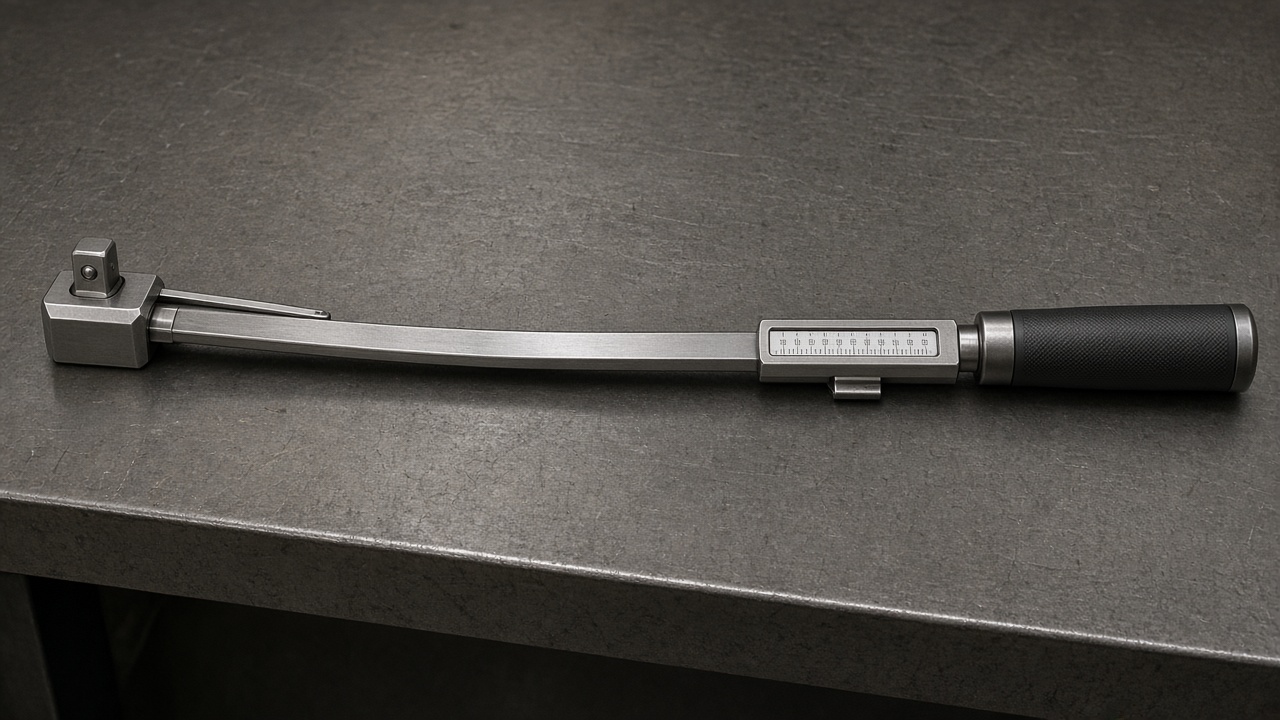
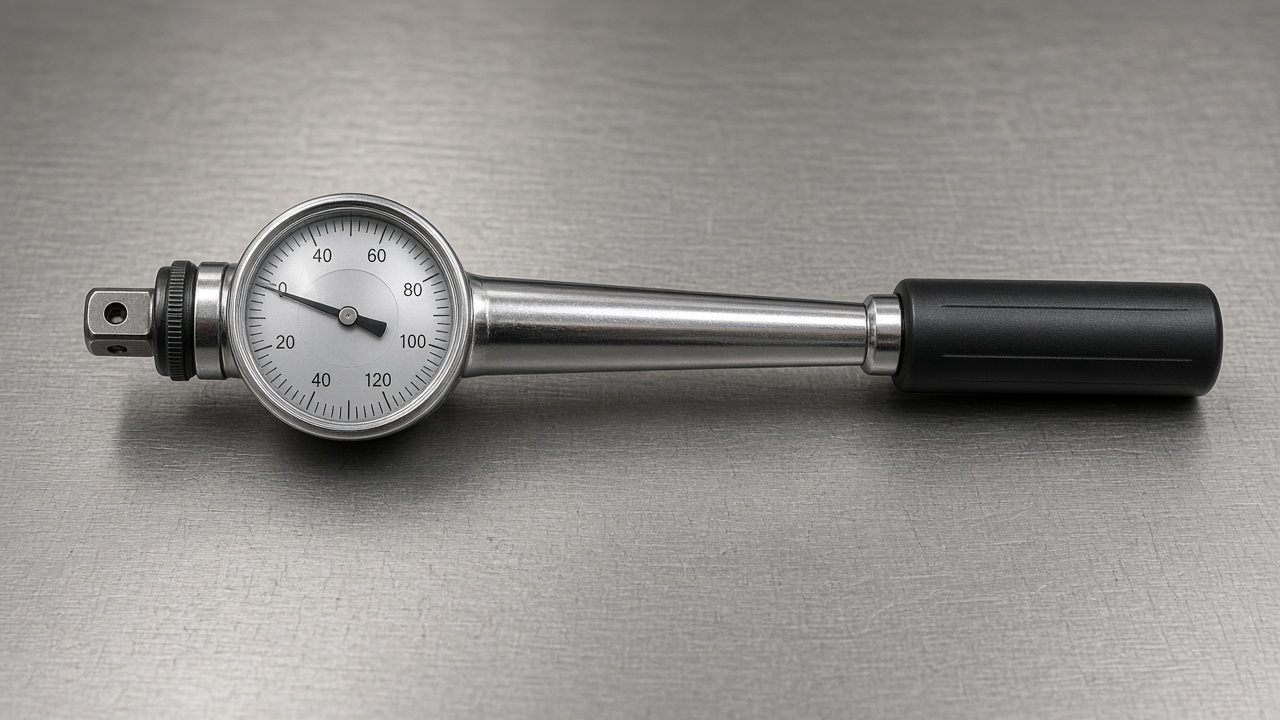
Straight extension
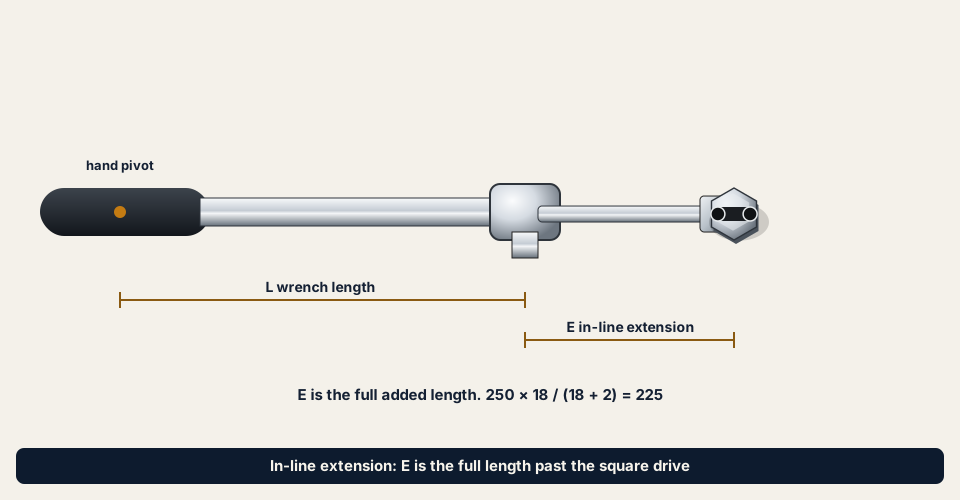
An extension or adapter in line with the wrench changes the length the torque is applied through. If L is the wrench length from the drive center to the hand-load point and E is the added length along that same line:
Tsetting = Tdesired × L / (L + E)
Example: a 12-inch wrench, a 3-inch straight extension, and 200 in-lb desired. The wrench is set to 200 × 12 / 15 = 160 in-lb. The fastener still sees 200.
Angled adapter
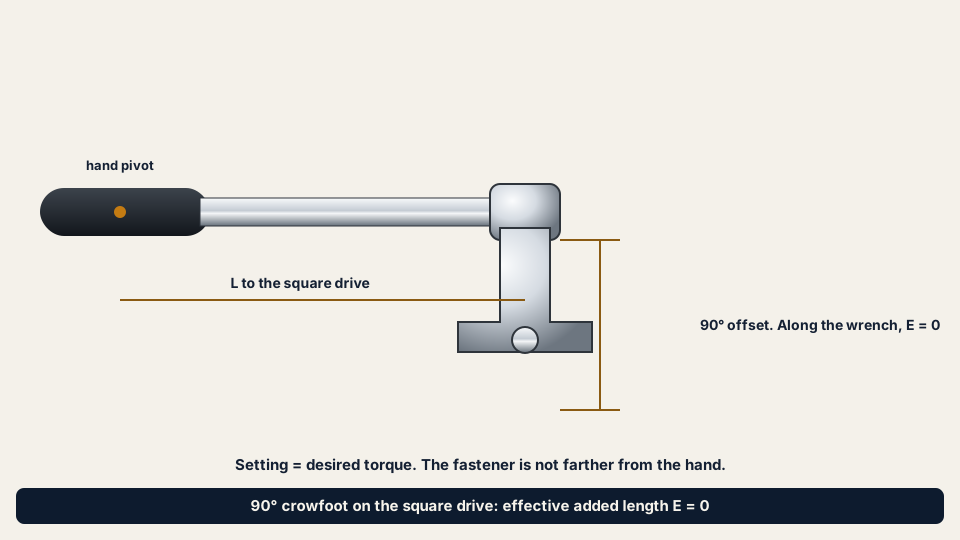
When the adapter sits at an angle, only the part of its length that lies along the wrench counts. If A is the adapter length and θ is the angle off the wrench axis, E = A × cos θ. At 90 degrees, cos 90° is 0, so E is 0 and the wrench setting equals the desired torque.
E = A × cos θ
The unit converter runs the same correction. Open the converter.
Follow the aircraft maintenance data for the torque value, the lubricant assumption, and whether an adapter correction is already built into a special tool. AC 43.13-1B Table 7-1 is the fallback standard-torque table, not a substitute for that data.